Types of Cutting Tools Used in CNC Machining—Choosing the Right Tool for the Application
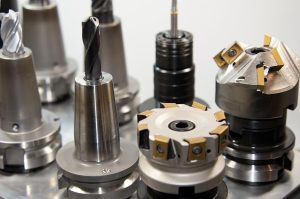 If you’re concerned with ensuring quality across your product inventory, you have likely considered employing CNC machining for your parts. Without a doubt, computer numeric control machining is the most accurate way to produce large quantities of highly specialized parts. But the nearly limitless options for cutting tools that can be used is what makes CNC machines so adaptable.
Here we explore many different types of CNC machine cutting tools and their various capabilities to help you determine the right tool for each application.
Drill Bits
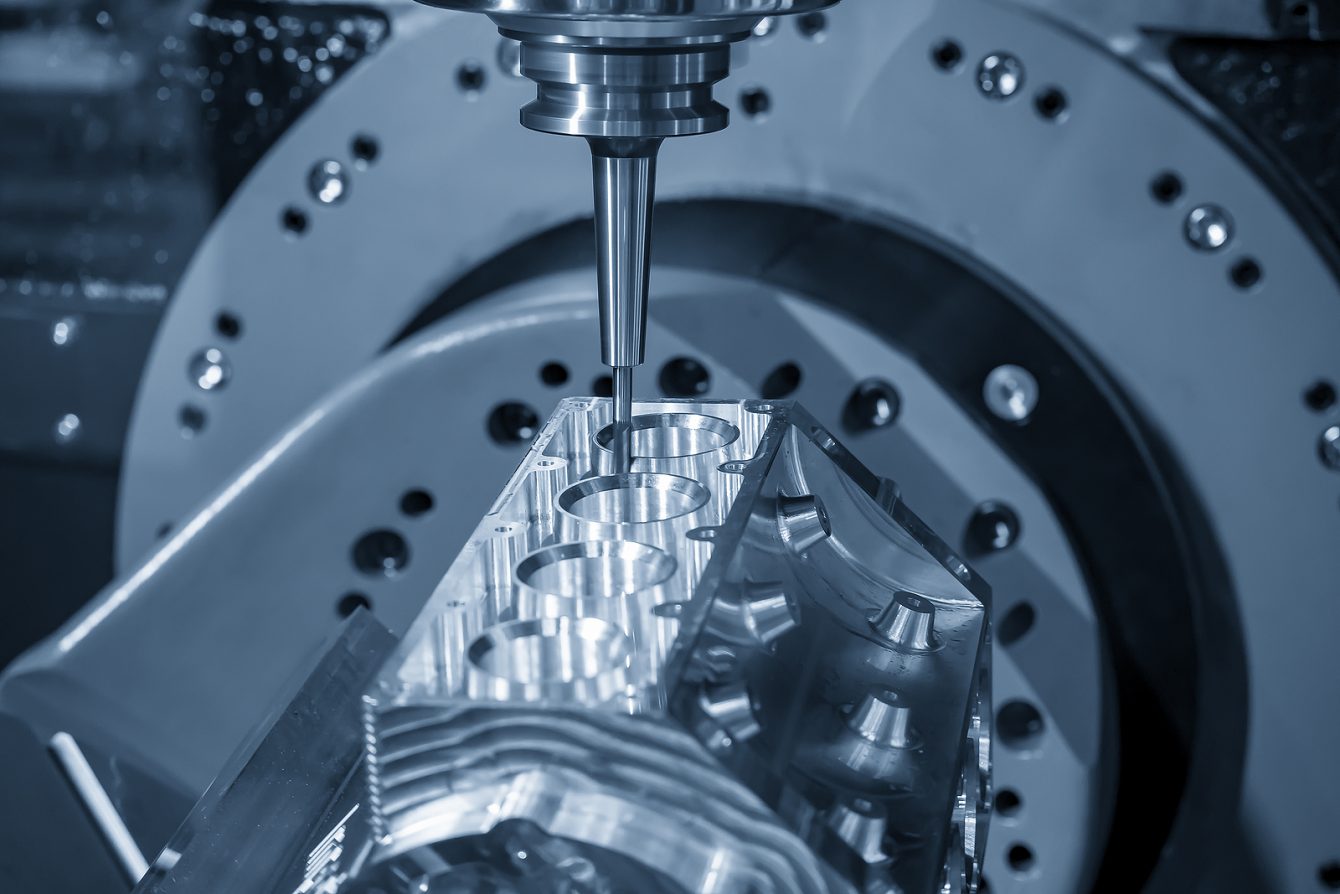
Drill bits have a shaft with one or more flutes that run down the outside of the tool, as well as a conical cutting end. The three most common bits used in CNC machining are center, twist, and ejector drills. For precisely drilling small holes on the workpiece, center drill bits should be used. The holes can then be properly drilled with a twist drill. Ejector drills, on the other hand, are more effective at drilling deep holes.
End Mill
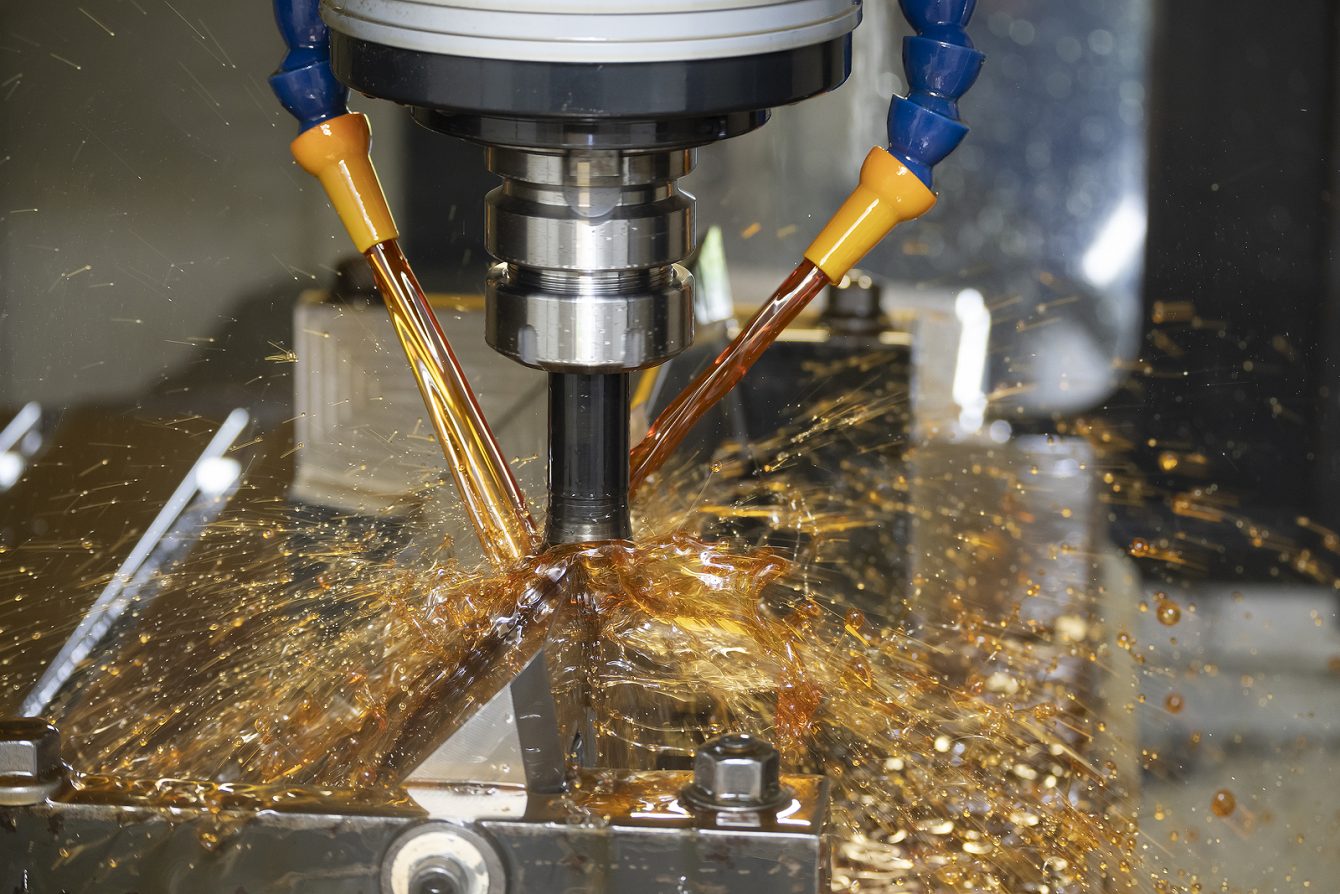
End mills often have up to eight pointed flutes on their ends and sides, which enable them to quickly remove heavy loads of material. If you want to cut straight into a material without needing a pre-drilled hole, an end mill should be your go-to tool.
Face Mill
The starting materials used in CNC milling machines typically require preparation before undergoing milling operations. Face mills can create flat parts of the workpiece before performing intricate cutting operations.
Hollow Mill
Hollow mills are cylinder-shaped cutting tools with three or more cutting edges that encircle and rotate around a cylindrical workpiece. Hollow mills allow you to quickly and effectively produce a pre-thread diameter.
Thread Mill
Thread mills are CNC cutting instruments used to create threads. However, unlike taps, CNC machines equipped with thread mills can cut both internal and external threads. If you want to cut through dense metals or asymmetrical pieces, you should choose thread mills.
Slab Mill
Flat surfaces are cut using slab mills, sometimes referred to as slab cutters or plain mills. These cutters have teeth around their periphery and are excellent for making wide and narrow cuts.
Reamer
If a workpiece requires a hole with a certain diameter, some manufacturers will jump to use a drill bit of that size. However, this can lead to a slightly larger hole than necessary. Instead, the best approach is to start with a smaller drill bit and then enlarge it with a reamer to the necessary diameter. Reamers provide the ability to increase the size of already-existing holes while maintaining precise dimensions and close tolerances.
Gear Gutter
Gear cutters are used to create gears for manufacturing industries. They can be used to create many different types of gears, such as spur, bevel, worm, screw, and helical gears.
Fly Cutter
Fly cutters are single-point rotary tools that create a flawless surface finish while making deep or shallow cuts. Fly cutters are less expensive and provide a better surface finish than most other types of face mills.
Demmer Manufacturing’s CNC Capabilities
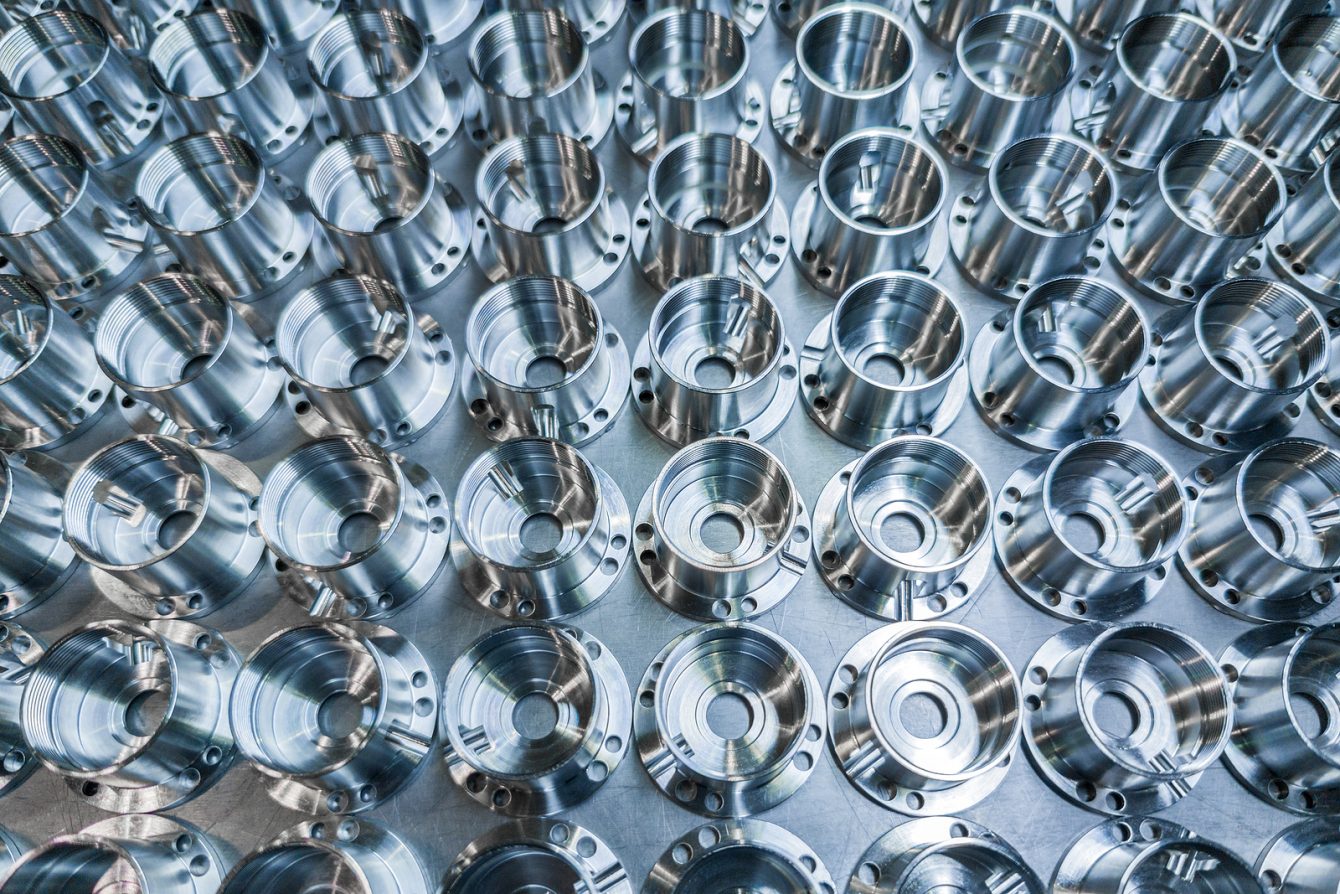
At Demmer Manufacturing, our portfolio companies provide complete solutions for precision-machined components. When developing parts for some of the world’s most critical and advanced equipment, machining flexibility and quality are absolutely essential. Our fabricators have advanced capabilities, including multi-axis machining, thin-walled machining, 5-axis machining, lathe turning, and precision lathe matching. This means we have affiliates that can rapidly deliver defect-free, tight-tolerance components that are tailored to clients’ exact specifications.
For more information on our various machining capabilities, contact Demmer Manufacturing today.